

Inspired by and adapted from the work of Kristen Lettini, who originally shared these five ideas in the June 2026 issue of The Journey.
Quick answer: Manual processes cost small businesses money in five main ways — delayed follow-up slows revenue, manual scheduling creates back-and-forth, rewriting the same messages wastes billable time, lack of pipeline visibility lets opportunities slip, and unstructured data leads to poor decisions. Even 10 minutes a day of repetitive admin adds up to 40+ hours a year. Stronger systems and automation recover that time without sacrificing a personal client experience.
You’ve probably heard people talk about the mental load at home — the invisible work of remembering, tracking, and managing all the little details that keep life running. Small business ownership comes with its own version.
Following up on inquiries. Checking unpaid invoices. Scheduling appointments. Sending reminders. None of these feel large on their own. But together they create operational drag that quietly leaks time, money, energy, and attention every single week.
Here are five of the most common culprits — and how stronger systems help.
1. Delayed follow-up slows revenue
Most owners know they should follow up on inquiries, quotes, and unpaid invoices. The challenge is that when follow-up relies entirely on memory, it becomes inconsistent. A busy week happens, a client email gets buried, a quote sits untouched, an invoice reminder slips because you were focused on delivery work.
Delayed follow-up often means delayed decisions — and delayed decisions often mean delayed revenue.
The math is sobering. If you spend just 10 minutes a day manually checking inquiries and resending information, that’s more than 40 hours a year. At a $100 hourly rate, that’s over $4,000 of time spent on repetitive tasks alone. Automated workflows and document reminders keep momentum going without constant manual attention.
2. Manual scheduling creates operational drag
“How’s next Tuesday at 3?” The back-and-forth required to book a single appointment adds up fast. Individually these messages feel manageable; over time they become operational clutter that eats into hours you could spend serving clients or generating revenue.
Many owners also pay separately for scheduling tools when similar functionality already exists inside platforms they’re using. Online scheduling reduces email ping-pong, simplifies rescheduling, and can automatically send confirmations and reminders by email and SMS — keeping clients informed without manual follow-up behind the scenes.
3. Rewriting the same communication wastes billable time
If you find yourself writing the same email over and over, that’s usually not a workload problem — it’s a process problem. Onboarding instructions, scheduling details, frequently asked questions: many owners spend hours every month recreating communication that could be standardized and reused.
Manual communication also creates inconsistency. One client gets a polished, thoughtful experience; another gets a rushed reply written between meetings — not because you care less, but because manual communication depends on your capacity in the moment.
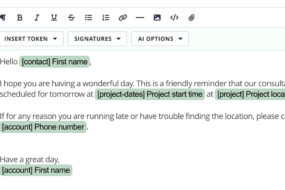
Templates, workflows, and saved communication help create repeatable client experiences without writing every message from scratch. Your systems should still sound like you, even when they’re doing the heavy lifting.
4. Lack of pipeline visibility leads to missed opportunities
One of the highest operational costs in small business is trying to track everything mentally:
- Who still needs a response?
- Which leads are waiting on a proposal?
- Who signed the contract?
- What project has stalled out?
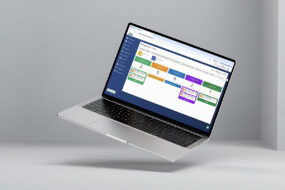
Without clear visibility into where clients and leads sit in your process, follow-up becomes reactive instead of intentional, and opportunities slip through the cracks. Pipelines let you visually track where everyone is throughout the customer journey, so you can see what needs attention at a glance. Paired with workflows that update stages and tags automatically, they cut the mental load while helping you respond more consistently.
5. Unstructured data leads to poor business decisions
Most owners ask some version of “How did you hear about me?” But if that information is collected inconsistently — buried in notes and emails — it becomes hard to use, and you end up making decisions based on assumptions instead of patterns.
A structured Lead Source question type automatically organizes and visualizes that data for you. That means you can quickly see where leads come from, which marketing efforts pay off, and where you may be wasting time, energy, or money.
What manual work really costs
The real cost of doing everything manually isn’t just lost time. It’s delayed cash flow, operational drag, decision fatigue, missed opportunities, and the feeling that your business depends on you being “on” at all times to function.
| Manual habit | Hidden cost | Stronger system |
|---|---|---|
| Memory-based follow-up | Delayed revenue | Workflows + reminders |
| Scheduling back-and-forth | Wasted hours | Online scheduling |
| Rewriting messages | Lost billable time | Templates |
| Tracking work in your head | Missed opportunities | Pipelines |
| Inconsistent data collection | Poor decisions | Lead source tracking |
The good news: fixing this doesn’t require overhauling your business overnight. The biggest improvements often come from identifying a few repetitive tasks that no longer need to rely on manual effort. An all-in-one platform like 17hats brings scheduling, workflows, templates, pipelines, and lead tracking into one place — so you can stop being the system and start running one.
Frequently asked questions
How do manual processes cost a small business money?
Through delayed follow-up that slows revenue, time lost to scheduling back-and-forth and rewriting messages, missed opportunities from poor pipeline visibility, and weak decisions from unstructured data. Small inefficiencies compound week after week.
What business tasks should I automate first?
Start with the repetitive task that drains the most time or causes the most missed revenue — usually follow-up reminders or appointment scheduling. Automating one high-friction process first delivers the fastest payback.
How much time does manual follow-up actually waste?
Just 10 minutes a day of manual checking and resending adds up to more than 40 hours a year. At a $100 hourly rate, that’s over $4,000 of time spent on repetitive admin.
Can I automate my business without losing the personal touch?
Yes. Templates and workflows should sound like you — they handle the timing and consistency while preserving your voice, so every client gets the polished experience instead of only the ones you reach on a good week.
Do I need separate software for scheduling and invoicing?
Often not. Many owners pay for standalone scheduling tools when an all-in-one platform already includes scheduling, invoicing, workflows, and pipelines together — reducing both cost and the gaps between disconnected tools.
About the author of the original concept
These five ideas come from Kristen Lettini, a Systems Strategist who helps service-based business owners create calm, professional client experiences without increasing their workload. With an MBA and a background in corporate communications, she brings a thoughtful, structured approach to small business systems, specializing in turning everyday processes into streamlined, repeatable workflows. Kristen is the host of the Build Your Own Fairytale podcast and a 17hats Ambassador. Read Kristen’s full article in the June 2026 issue of The Journey.
Ready to stop running on memory? Start a free 7-day trial of 17hats and let workflows, scheduling, and pipelines carry the repetitive work for you.
Latest Posts

How Photographers Book Headshot Sessions in 17hats
September 24, 2026
Using 17hats Questionnaires To Gather Wedding Day Details
September 23, 2026
How Balloon & Event Decor Businesses Rebook Annual Clients in 17hats
September 22, 2026
The Project Brief That Builds Itself From What You Already Know
September 19, 2026
Automation Is Good. Knowing It Ran Is Better.
September 17, 2026