

A thought on what automation really means — and why most tools get it wrong.
There’s a version of business software that gives you a long list of features and calls it automation.
Invoicing? Check. Contracts? Check. Online booking? Check. Email templates? Check.
The boxes get ticked. The feature comparison chart looks impressive. And you sign up, excited — only to find yourself, six weeks later, still doing everything manually.
Just with more tabs open.
We’ve heard this story from hundreds of small business owners. They came to 17hats after trying other tools. Not because those tools lacked features. Because the features didn’t actually connect to anything.
That’s the difference we want to talk about today.
A Feature Is Not an Automation
Having an invoice template is not the same as having your invoices sent automatically.
Having a contract builder is not the same as having contracts delivered the moment a client says yes.
Having an email tool is not the same as having the right email go to the right person at exactly the right moment — without you touching it.
Features are ingredients. Automation is the meal. And most business software sells you a bag of ingredients and leaves you to figure out the recipe.
17hats was built around a different idea: that a small business owner’s time is too valuable to spend connecting dots that software should connect for them.
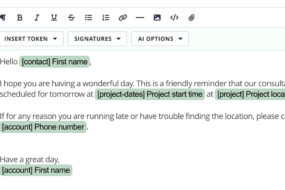
When a new lead fills out your inquiry form, 17hats doesn’t just store their information. It sends them a personalized response immediately, tags them by service type, and can start a follow-up sequence — all before you’ve even opened your laptop.
When a client accepts your quote, 17hats doesn’t just mark it as accepted. It moves them to the contract. Then, when they sign, it shows the invoice. When they pay, it can trigger your entire onboarding workflow — welcome email, questionnaire, client portal — automatically, in sequence, without a single manual step from you.
That’s not a feature. That’s a system that works while you’re doing the actual work.
The Problem With Piecemeal Tools
Most small business owners don’t have one tool. They have six.
A scheduling tool. An invoicing tool. A contract tool. An email tool. A form builder. A CRM that technically connects all of them — except when it doesn’t.
The hidden cost of this approach isn’t the subscription fees (though those add up). It’s the gaps between the tools. The moment where Calendly tells you someone booked, but your CRM doesn’t know yet, and your invoice tool is a completely separate login, and your contract system has never heard of this client before.
Every gap is a manual step. Every manual step costs you time. And your time — spent copying information between tools, checking that everything sent correctly, chasing down what didn’t — is the most expensive thing in your business.
When your tools don’t talk to each other, you become the connection. And you have better things to do.
17hats exists in one place. Your leads, your quotes, your contracts, your invoices, your calendar, your client records, your workflows — all of it, connected, in a single platform that already knows what happened before and knows what needs to happen next.
There’s no gap to fall into. There’s no manual step to remember. The system holds it together so you don’t have to.
What Practical Automation Actually Looks Like
We want to be specific here because ‘automation’ is one of those words that sounds impressive and means nothing until you see it working in your actual business.
Here’s what it looks like for a photographer who books a new wedding client:
The couple fills out their inquiry form on a Sunday evening. Within three minutes — while she’s having dinner — they receive a warm, personalized response with her availability and a link to book a discovery call. She’s asleep by the time they’ve booked the call for Tuesday.
After the call, she sends a quote with two package options. When they choose the premium package and click accept, the contract goes out automatically. They sign it that night. The deposit invoice arrives in their inbox before they close their laptop. They pay. A welcome email, a planning questionnaire, and her client prep guide all land in sequence over the next 24 hours.
She wakes up Wednesday morning with a fully onboarded, paid client — and she didn’t send a single email after the discovery call.
That’s not a fantasy scenario. That’s a 17hats workflow that any member can build in an afternoon.
The result isn’t just saved time. It’s a client experience that feels attentive, professional, and responsive — even when the business owner is nowhere near their phone.
Automation Isn’t About Removing the Human. It’s About Protecting It.
Here’s the fear we hear most often: ‘Won’t automation make my business feel robotic?’
It’s a fair concern. And the answer is: only if you do it wrong.
The businesses that use 17hats most effectively aren’t replacing their personality with automation. They’re using automation to protect the parts of their business that need to stay human.
When your onboarding is automated, you’re not on your phone at 10pm sending the same welcome email for the fifteenth time this month. You’re present with your family. You’re well-rested. You’re creative and energized when you walk into that client meeting the next morning.
When your invoices chase themselves, you’re not sending awkward payment reminder emails. You’re spending your client-facing time on the relationship, not the admin.
Automation doesn’t replace warmth. It creates the conditions for it. The business owners who are most present and most personal with their clients are usually the ones with the best systems behind the scenes.
At 17hats, we’ve built tools that let you write your automated emails in your own voice, personalize them with your client’s details, and time them to land at exactly the right moment in the relationship. The result is communication that feels human — because it is, just delivered consistently.
Built for the Business You’re Actually Running
We’re not building for enterprises with dedicated ops teams and six-figure software budgets. We’re building for you — the photographer, the consultant, the event planner, the designer, the coach who is doing excellent work and deserves a business that supports them.
That means 17hats has to be powerful enough to handle real complexity, and simple enough that you can actually use it. Not just in theory. On a Tuesday afternoon with three client emails waiting.
It means the workflows have to be flexible enough for a wedding photographer’s intake process and a business coach’s monthly retainer model, and a graphic designer’s project-based billing — all different, all automatable, all inside the same platform because at the end of the day, business is business; no matter the profession.
And it means we’re constantly listening. The features in 17hats didn’t come from a product team guessing what small business owners need. They came from watching real members struggle with real problems, and building the solution that actually fixes the problem — not the one that looks good on a feature list.
The Magazine That Goes Deeper
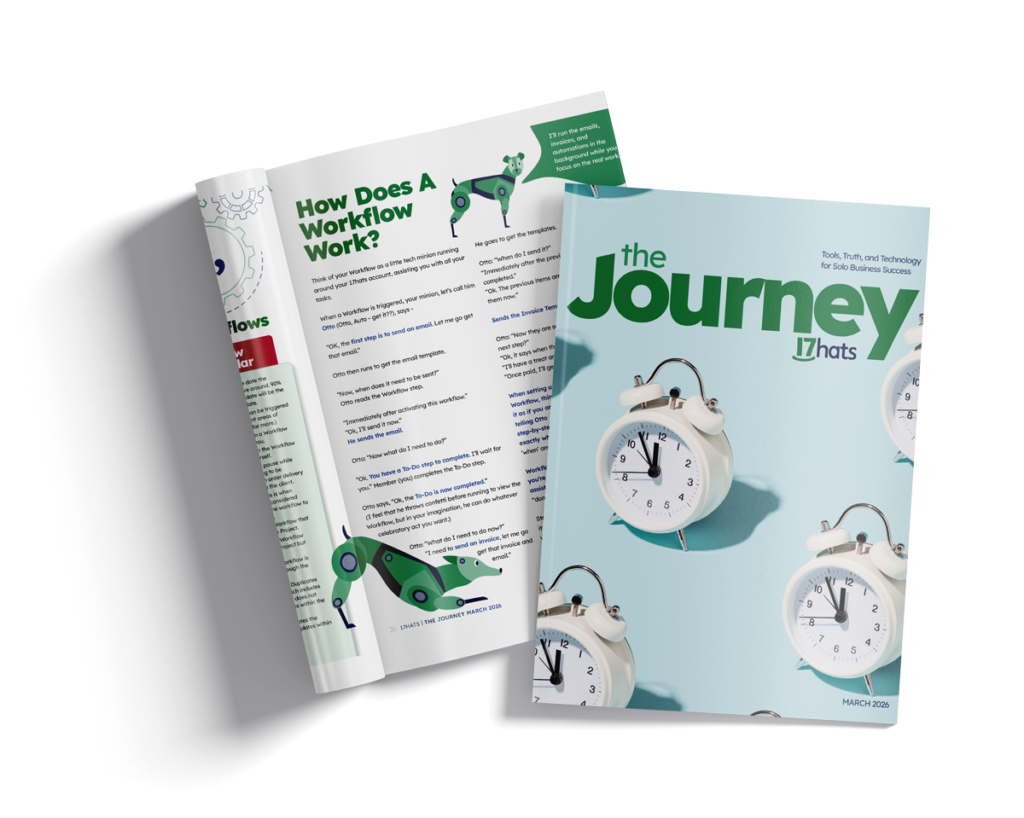
Every month, The Journey — 17hats’ free monthly magazine — goes deeper on one aspect of running a better small business. March’s issue was automation.
Not a checklist. Not a feature tour. A real exploration of how to think about your business systems, where to start, how to build workflows that actually work, and what’s possible when your business stops depending on you for every small thing.
It’s the kind of content we wish existed when we were first building 17hats. Practical, honest, and built for the person who is doing the work — not just reading about it.
Keep the Momentum Going — Dive Into The Journey
Read our monthly small business magazine.
Ready for more time-saving tips and real business inspiration?
✨ Discover stories, strategies, and insights from entrepreneurs like you in The Journey, March Issue.
Latest Posts

The Real Reason You Can’t Leave Work at Work
September 12, 2026
10 Policies Every Small Business Needs (With Sample Wording)
September 10, 2026
What to Outsource First When You’re a Team of One
September 3, 2026
How to Get Paid Faster: Close the Cash Flow Gap
September 2, 2026
Why Productivity Hacks Don’t Fix Burnout—And What Does
August 27, 2026