
By Jaimie Dee, co-owner of Jaimie Dee Photography, 17hats Ambassador. Adapted from her feature in the September 2026 issue of The Journey.
Not every deadline carries the same weight when you run your own business.
A wedding date feels real. A scheduled consultation feels real. A client meeting with a video link and a calendar invite feels real, because another person is attached to it and that changes how the deadline lands.
Internal tasks hit differently. Editing images, preparing galleries, building album mockups, finishing product previews. That work happens behind the scenes, but it still affects the person waiting on the other end, who is wondering when they’ll see their images or get the next update. Without a clear date the work stretches out week after week, and the client ends up in the uncomfortable position of having to ask.
Jaimie Dee’s studio knew this pattern well. Their old image-delivery process looked perfectly safe on paper. The wedding happened, they backed up the images, they told themselves they’d start editing soon. Then a week passed. Then another. Sometimes a gallery took a month, sometimes two, sometimes longer. The client was still waiting even when they weren’t asking, and every delay made the work feel worse to sit down to.
What they needed wasn’t more discipline. They’d tried that. What they needed was a deadline with a client on the other end of it.
Use the meeting as the deadline
The fix was simple, though it felt a little reckless the first time. Stop waiting until the images are finished to schedule the meeting. Schedule the meeting, then edit toward it.
In their studio that meeting is called Premiere Night: the scheduled online appointment where clients see their finished images for the first time and make final ordering decisions. In photography this kind of meeting goes by several names, including Image Reveal, Ordering Appointment, or In-Person Sales.
They introduce the idea early, starting at the first consultation, so clients understand this is when their images arrive and when they can talk about products if they want them. When they can, they get it on the calendar before the wedding has even happened.
Once that meeting is on the books, everything else can be planned backwards from it. They protect editing time, they build the schedule around what actually has to be delivered, and the work has somewhere to land.
Where the scheduling tool comes in
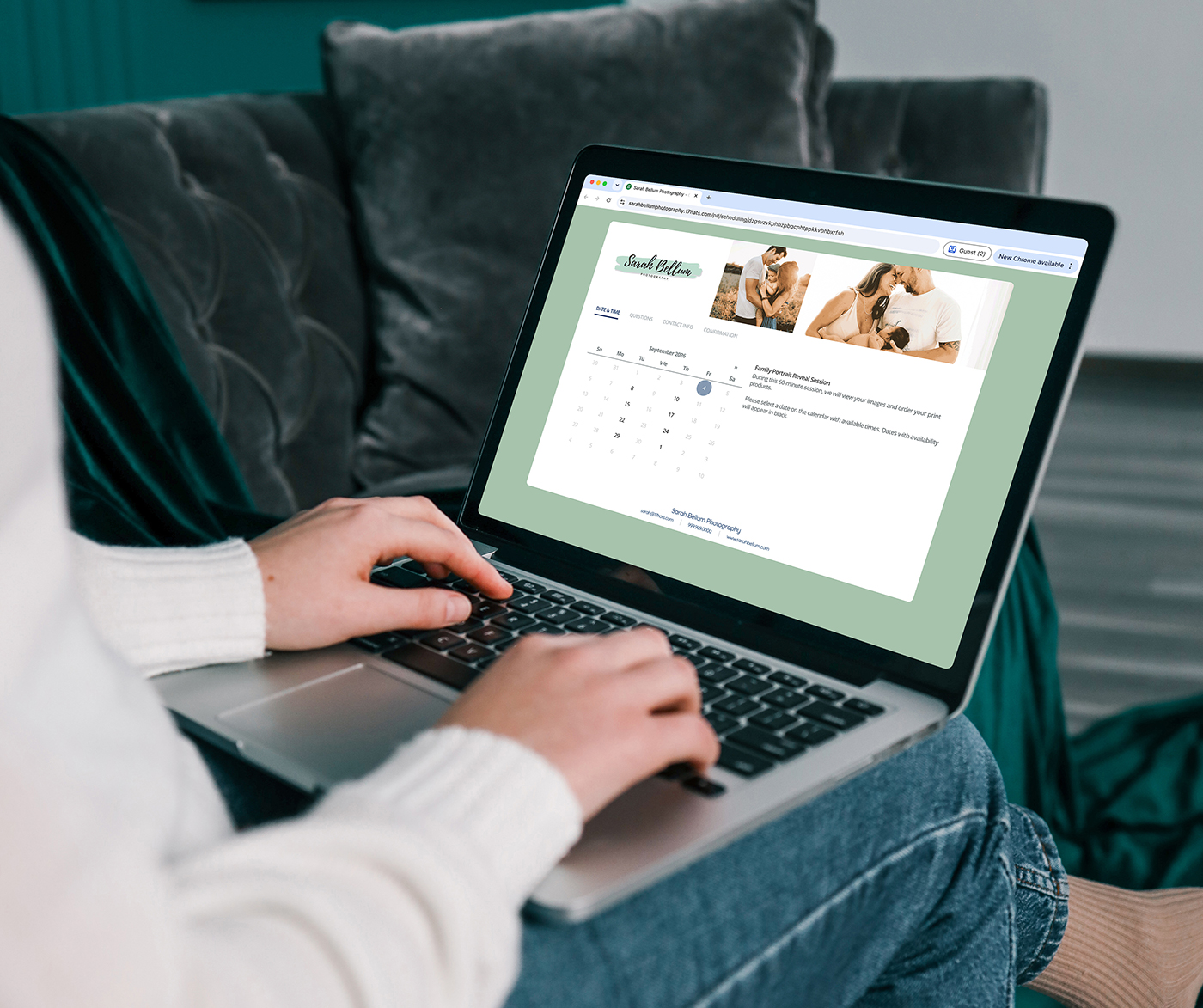
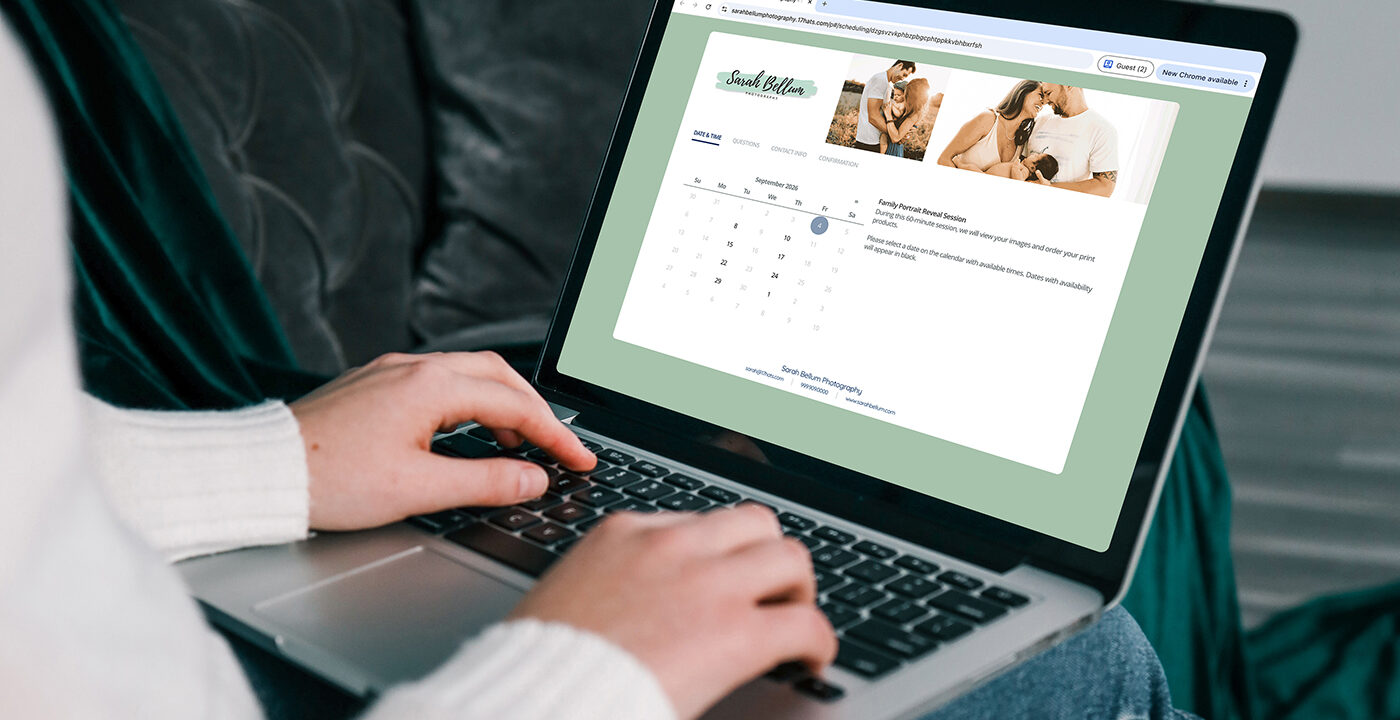
Clients choose from appointment times the studio has intentionally made available, which gives them an easy way to book while the studio keeps control of the calendar based on editing workload and capacity.
The moment the appointment is booked, the commitment is real. It’s on the calendar, the confirmation email goes out, the meeting link is included, and everyone knows what to expect. Templated emails in automated sequences then prepare clients beforehand with ordering details, product options, time-sensitive offers, and a nudge about who else they might want involved in the decision.
The client gets a date to look forward to. The studio gets a production deadline. Image delivery stops being an open-ended task waiting on someone to feel ready and becomes part of the client experience, with a real person and a real date attached.
The client side of it
Scheduling the meeting before the work is done gives the studio accountability. What surprised them is how much it gave the clients.
Instead of a loose estimate and a hope that things line up later, they can talk about the delivery date with confidence. The timeline still depends on the season, the studio’s workload and the client’s own schedule, but the client leaves with a real date rather than a range.
So nobody is waiting months for an update or working up the nerve to ask when their gallery will be ready. They already know. That clarity reduces anxiety, builds trust, and makes timely delivery feel like a designed part of the experience rather than something you keep apologizing for.
Availability is the safety valve
A deadline only helps if it’s realistic, which is why the second half of this matters as much as the first.
Inside 17hats the studio controls how many Premiere Night appointments exist and when they can be scheduled, so clients only choose from dates the studio can genuinely support. Sometimes they can deliver quickly. Sometimes busy season, travel, other sessions or the client’s own calendar means the meeting sits farther out.
The aim isn’t pressure for its own sake. It’s a clear, realistic date everyone can plan around, which is where scheduling stops being client convenience and starts being workload management. Limit the availability and you create deadlines that motivate you without burying your week.
Beyond image delivery
Premiere Night comes out of a photography workflow, but the mechanism travels further than that.
Now, when the studio catches itself dragging on any part of a client’s journey, they ask whether that thing would benefit from a real deadline with a client attached. Album mockups, product previews, a design presentation, a client approval meeting, any next step somebody is waiting on.
The same question works for a copywriter sitting on a draft or a consultant sitting on a report. When a task keeps sliding, the problem usually isn’t discipline. It’s that nobody is expecting it at four o’clock on a particular Tuesday.
A few questions
How long should photo delivery take?
There’s no universal standard, and the number matters less than whether the date is committed. A studio that promises six weeks and has the reveal booked for week six will outperform one that promises four and quietly takes ten.
What is a premiere night?
A scheduled appointment, in person or online, where clients see their finished images for the first time and make final ordering decisions. Also called an Image Reveal, Ordering Appointment or In-Person Sales session.
Does this work outside photography?
Yes. Any deliverable that keeps sliding tends to benefit from being tied to a meeting where you present it to the client.
Take the deliverable you’ve been avoiding, find the client waiting on it, and put a meeting on the calendar to show it to them. The work tends to meet the date.
17hats handles online scheduling, availability limits, confirmation emails and automated workflows in one place, so a delivery date can be something a client books rather than something you promise. Start a free 7-day trial.
About the author
Jaimie Dee is the co-owner of Jaimie Dee Photography, a Georgia-based wedding and portrait studio known for emotional imagery, finished artwork, and a highly guided client experience. Her studio combines thoughtful planning, intentional sales, and clear client communication to create a client journey that feels polished, personal, and carefully built from start to finish.
This article is adapted from Jaimie’s feature in the September 2026 issue of The Journey, 17hats’ magazine for solo business owners. Read the full issue here.
Latest Posts

How to Follow Up on a Quote Without Sounding Desperate
October 22, 2026
Inside October’s Journey: From First Inquiry to Paid Invoice
October 15, 2026
How Business Consultants Protect Their Expertise With 17hats
October 9, 2026
Treat Your Collaboration Partners Like Clients
October 6, 2026