

Someone found your website, filled out your form, and hit send. At that point they know your name, roughly what you do, and not much else. What happens over the next few days decides whether they become a client.
That stretch, from the first inquiry to the paid invoice, is what the October 2026 issue of The Journey is about. The short version of what our contributors found: a client booking process holds up best when very little of it depends on you remembering things. Follow-up runs on a schedule. A date is held by a calendar event instead of a promise in an email. The contract writes down the details both sides would otherwise recall differently, and the client can accept, sign, and pay without waiting on you to send the next piece.
Read the full October 2026 issue →
Two halves of the same stretch
In her letter from the CEO’s desk, Amanda Rae splits it in two. The Lead Experience is where an inquiry gets answered and qualified. The Booking Experience is where the date, the quote, the contract and the payment come together.
She also points out that the leaks are rarely dramatic. “A quote sits unanswered because the follow-up never went out. A date gets ‘held’ in someone’s memory and then double-booked. A contract leaves out the one detail both sides remember differently six weeks later.” Most of these, she writes, come back to one busy person trying to remember everything.
Her suggestion for the month is one we’d pass along too. Go through your own process the way a lead would. Fill out your inquiry form on your phone, book a call through your own scheduling link, open a quote and try to pay the deposit. Wherever you’d hesitate is probably where your leads are hesitating.
The Lead Experience
Answer with a number
Jamie M. Rapavy owns Alco-Haul Mobile Bar Co., and she’s learned that a wedding couple filling out her form is usually filling out four others in the same sitting. Whoever responds first with something real gets the first shot. So she sends the price before any discovery call.
That only works in peak season because her quote template already holds every option she offers (staffing levels, all three bar service types, add-ons with photos), so building a quote is, in her words, “mostly deleting.” A 12-email workflow takes over the follow-up from there.
Follow up like a courtesy
Liz August doesn’t think most stalled quotes have much to do with price. The lead wants to work with you, but deciding takes energy they don’t have this week, and the quote slides into “later.” Her answer is three emails across 14 days: a friendly check-in on day 3, an “are we a good fit for you?” note on day 7, and a final email on day 14 with the subject line “Last one!”
She gets more results from that subject line than from any other email she sends. A few people have even thanked her for it.
Hold the date for real
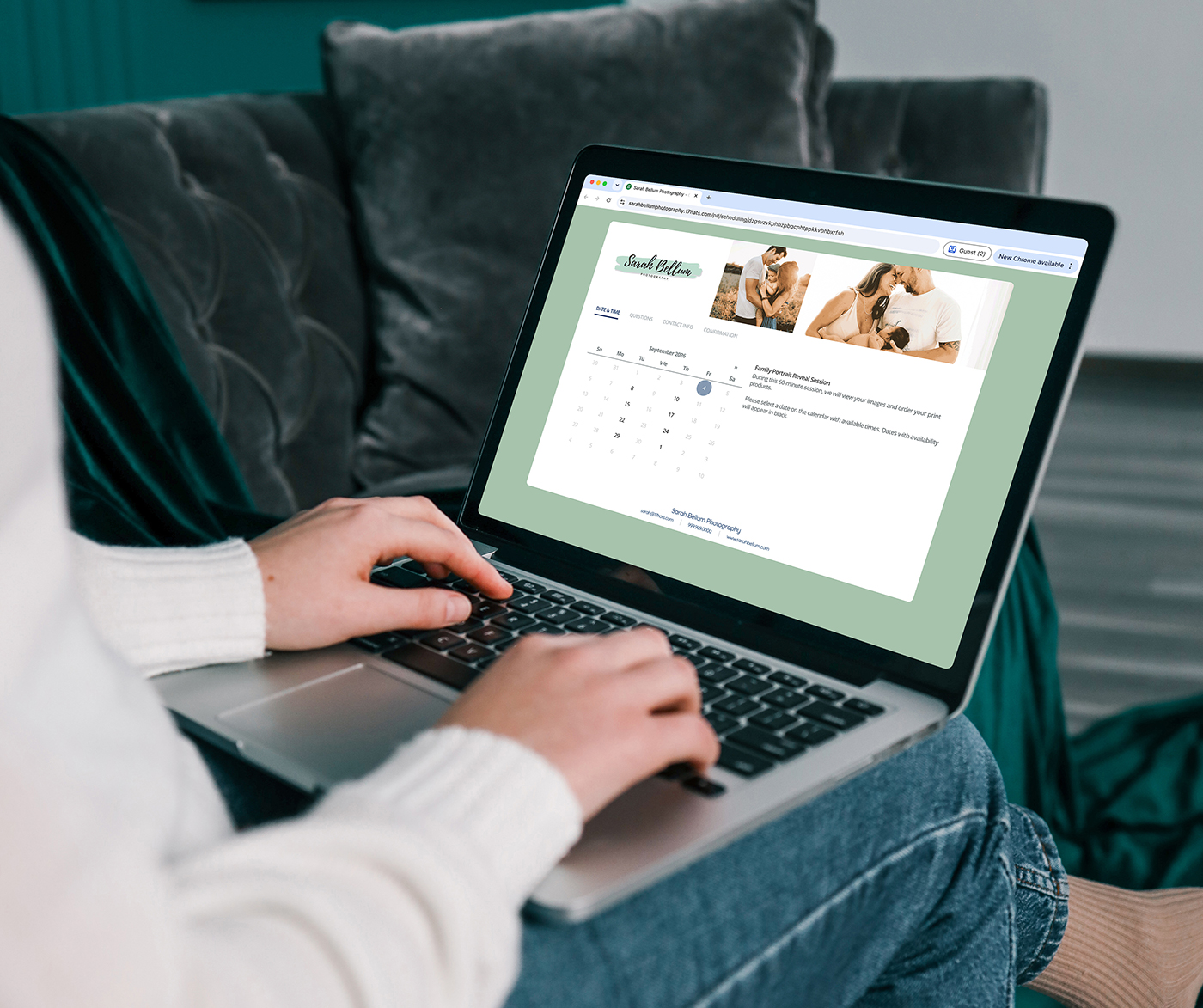
The staff piece “Holding the Date” goes after a habit almost every service provider has: telling a client “I’ll hold the 28th for you” and then trusting your memory. Online Scheduling in 17hats cross-checks your Booked, Leads, Pending and Personal calendars (plus a connected Google Calendar) before anyone can book, so a slot disappears the moment it’s taken. One detail that catches people out: it reads events, not to-dos. If an afternoon needs protecting, it has to be on a calendar as an event.
The Booking Experience
What belongs in every service contract
This guide lists seven things every agreement should cover, whatever you sell, starting with what you’re delivering in specifics. “Photography services” isn’t a scope. “Six hours of coverage, one photographer, 400 edited images delivered within 30 days” is.
The one most people skip is number six, what you need from the client. Content, access, approvals, a key to the building. If those aren’t listed with deadlines, the article notes, “every client delay quietly becomes your emergency.”
One send, three decisions
The 3-in-1 document puts a quote, contract and invoice into a single email. The client can’t sign until they’ve accepted the quote, and can’t pay until they’ve signed, so nobody pays a deposit on a package they didn’t pick. New this month is the Quote Selections Token, which pulls whatever the client chose on the quote straight into the contract.
After the yes
Two of this month’s ambassadors write about what happens once someone has booked, which is where a lot of future business quietly comes from.
Kristen Lettini has hosted the Build Your Own Fairytale podcast for more than four years and 150 episodes. When a guest books an interview through her scheduling link, a workflow starts that carries them through confirmation, reminders, a thank-you, publish-date check-ins and promo assets. Her line on it: automate the reminder, not the relationship.
Elizabeth Lamb, a portrait photographer in London, keeps past clients warm with one internal project and three workflows: an annual check-in, a birthday sequence, and an end-of-year run of holiday emails. Her favorite detail is a “Recent Memory” field she fills in after each shoot, which gets pulled into her December email so it reads like a personal note.
Also in this issue
- Two-way SMS texting is now built into 17hats, and the new Texting Action workflow step can send texts automatically as part of a workflow (if a client hasn’t opted in, 17hats creates a to-do instead).
- Feature updates including Event Emails with smart event tokens, smarter calendar sync, a default brand setting, and Project archive activity in Recent Client Activity.
- Four new tutorials from 17hats University, among them enabling Apple Pay and Google Pay on invoices for Stripe Payments members and the new Project Details question type in Lead Capture Forms.
- Ambassador events: Deb Mitzel’s Power Hour on Tags & Custom Fields (Tuesday, October 20, 2026, 11 a.m. PT, details here) and Sara Alepin’s free Collaborations That Monetize Summit, January 25 to 27, 2027 (register here).
- An “Inquiry to Invoice” crossword. We won’t spoil it, though 7-across is thirteen letters and you have almost certainly sent one this week.
The voices behind this issue
- Liz August, The Follow-Up System That Wins More Business
- Jamie M. Rapavy, Quote First, Talk Later: How I Turn Inquiries into Quotes in Minutes with 17hats
- Kristen Lettini, Your Podcast Guest Is More Than an Episode
- Elizabeth Lamb, How a Photographer Stays Top of Mind with 17hats
Plus staff features on Online Scheduling, service contracts, and the 3-in-1 document, and a letter from CEO Amanda Rae.
FAQ
What is The Journey?
It’s 17hats’ monthly magazine for solo and small business owners. Each issue picks one part of running a service business and pairs how-to guides with stories from 17hats Ambassadors who’ve built the system themselves. It’s free to read online.
What’s the difference between the lead experience and the booking experience?
The lead experience runs from inquiry to qualified lead: your response time, your first quote, your follow-up. The booking experience starts once they’re ready to commit, and covers locking the date, the quote, the contract and the deposit.
Where should I start if my booking process feels messy?
Do Amanda’s exercise first and walk through it as a lead on your phone. If nothing jumps out, look at follow-up. Quotes that go quiet with no second email are the most common leak we hear about, and Liz August’s three-email sequence takes maybe an hour to build.
Over the next couple of months we’ll be turning each of these features into its own post here on the blog. If you’d rather read them all at once, with the screenshots, the full October issue is here. And if you’re not on 17hats yet, everything in this issue works on a free 7-day trial.
Latest Posts

Inside October’s Journey: From First Inquiry to Paid Invoice
October 15, 2026
How Business Consultants Protect Their Expertise With 17hats
October 9, 2026
Treat Your Collaboration Partners Like Clients
October 6, 2026